EMERGENCY LIGHTING DESIGN: 5 THINGS YOU NEED TO KNOW
We are surrounded by emergency lights in places like our workplaces, recreational areas, and commercial buildings.

Large incandescent spotlights set atop lead-acid batteries (the kind used to power vehicles) and hooked into the electrical system of the building served as the first emergency lighting devices. As the power went off, the units' transfer switches turned, lighting up the spotlights...as long as the battery charge lasted.
The brilliant minds in lighting design immediately decided that these low power, unstable solutions weren't up to the task of providing adequate visibility during an emergency, and they collaborated to develop something superior.
Throughout the past century, emergency lighting design has progressed significantly, making it more sophisticated than ever. Emergency lights, though, what is that? How does it function and where should it be installed?
If you are unsure, just check for the tiny green guy above the entrance and read these FIVE points about emergency lighting design that you should be aware of.
1) EMERGENCY LIGHTING COMES IN 5 TYPES
When a building's main power fails, emergency lighting is provided to offer a suitable lighting option. Emergency lighting is dependent on a number of factors, including placement and design, to effectively perform the function for which it was created: aiding in times of need.
There are five different kinds of emergency lights, and people frequently mix up the different kinds. Let us illuminate it for you now.
- MAINTAINED
This sort of fixture is intended to operate like a typical light fixture, with continuous illumination and control over nearby lights. The maintained emergency fitting will function with less light output if there is a power outage. Theaters, movie theatres, and shopping malls frequently use this type of emergency lighting.
- NON-MAINTAINED
Normally off, this style of fitting will automatically turn on in the event of a power outage. The batteries get constant charging. Emergency exit signs, of which these are a component, are the most typical type of lights. They are most frequently utilised in workplaces like offices and factories where practising escape familiarity is common.
- Emergency DALI
Digital Addressable Lighting Interface is known as DALI. This testing and control system combines dependability with flexibility. More control, thorough monitoring, and reporting of emergency lights are all made possible by this technology.
How? DALI lighting can connect with its network because of this. Information may be exchanged between devices that speak the same "technical language," and DALI can "talk and listen" to a variety of devices, including transformers, ballasts, and other lighting equipment.
Each DALI device contains onboard memory that houses all pertinent data about the device, including diagnostics, and is built on a distributed intelligent architecture.
- BOARD BATTERY
It is here that all necessary luminaires, whether they are maintained or not, are supplied with battery power for emergency illumination in the case of a power outage. A charge-healthy LED indication that indicates that the battery is being charged when there is a mains feed will be included on all emergency luminaires. The LED will turn out when the power is off, and the battery will light the lamp instead.
- SUSTAINED
Here, the emergency light source is provided by a lamp that is independent from the primary lamp. As the "sustained" lamp is only utilised in emergency mode, the goal is to minimise any chance of emergency lamp failure. Only an emergency luminaire that has been maintained will be affected by this.
2) WHERE AN EMERGENCY LIGHTING INSTALLATION SHOULD BE MADE
In the case of a mains power outage, emergency lighting is intended to ensure a building's safe evacuation, lessen fear and confusion, and safely manage dangerous activities. Because of this, emergency lighting may be divided into three categories: high-risk tasks, open spaces, and escape routes.
The lighting design in these particular designated locations enhances functionality and serves a purpose, whether it is to direct, guide, or offer light to carry out significant duties.
- ESCAPE TRAILS
Escape routes and emergency exits need to be marked with signage. They ought to be lit up so that people can clearly see the escape path to a place of safety. Illuminated signs must be placed in accordance with The Health and Safety (Safety Signs and Signals) Regulations of 1996 at all final exits as well as in areas where individuals might be unsure of the best way to go to safety.
It is necessary to light every turn that leads to an escape door. Each exit door should have an escape lighting luminaire installed next to it, as well as anyplace else it may be essential to draw attention to safety measures or possible hazards.
The green guy and a directional arrow used to indicate escape route passages are made in accordance with BS 5499 designs. These arrows must direct people to the nearest fire escape. Left and right fire exit arrows are obvious to utilise, but when should you use the up or down arrow?
When you need to continue on your path and go for another fire escape sign, use the Up arrow. It can also be used to exits at the end. Unless a ramp or step-down is available right outside.
When you need to keep moving forward and head in the direction of another fire escape sign, utilise the downward arrow. The down arrow is necessary if there is a stairway descending down directly following an exit sign.
Emergency luminaires should be stationed near the following:
- Each exit door intended to be used in an emergency
- Stairs so that each flight of stairs receives direct light
- Change in level
- Mandatory emergency exits and safety signs
- Change of direction
- Intersection of corridors
- Outside and near to each final exit
- First aid post
- Fire fighting equipment
- Fire alarm call points
- PUBLIC AREAS
Emergency lighting is necessary in spaces greater than 60 m2, open areas with an escape route through them, and risks found in building risk assessments. Offices, restrooms, reception spaces, and meeting rooms typically fall under this category.
The design of emergency lights may also bring unique needs for certain locations. Emergency lighting, for instance, need to be planned to replicate general focus downlighting in a showroom in the event of a power outage or other disaster。
- TASK AT HIGH RISK
Many times, in an emergency, employees or members of the public can simply stop what they're doing—whether it's using a computer, making a phone call, or attending a meeting—and leave the building.
Nonetheless, some employees could be engaged on a dangerous duty, including using machinery or hazardous materials. The person using the device under these circumstances needs to be able to see clearly enough to turn it off securely.
Production lines and plant control rooms are places with a significant physical danger. There might not be an obvious escape path in certain locations, thus strategically positioned emergency lights will be required to emphasise significant impediments or dangers.
According to codes of practise and emergency lighting laws, emergency lighting with a minimum light level of 15 Lux must provide at least 10% of the usual light source at the area of any hazard.
Because these personnel will need more time during an emergency and the risk is higher, it is important to consider these locations when building an emergency lighting system.
3) BE AWARE OF REGULATIONS FOR EMERGENCY LIGHTING
Knowing the rules governing emergency lighting design can be beneficial when deciding on the ideal layout and style for your fixtures. Regulations for emergency lights are crucial since their effective usage will decide people's safety in an emergency.
While "regular" lighting used in everyday life serves a function and is subject to its own set of rules, emergency lighting is also judged on how well it helps people in dire circumstances.
- AVOID SIGNS
Illuminated In order to make sure that escape signs are visible and readable, they can either be internally or externally lighted. The minimum illumination level for externally lighted signage should be 5 lux.
While the mains are running, all signs—photoluminescent, self-adhesive, or perspex—must now be lit to a brightness of 100 lux.
According to the viewing distances described in BS 5266, signage should ideally be clearly visible, face the direction in which people would be looking, and not be on the ceiling or at an angle.
- LIGHTING REQUIREMENTS
Exit (safety) signs and escape routes (such as hallways, stairs, etc.) shall maintain an illuminance of 1 Lux along the centre line.
More than 60 m2 open areas require anti-panic lighting with a 0.5 Lux minimum brightness.
High-Risk Job Locations that need more light, usually for a shorter period of time, in order to make a risky machine, process, or area safe. In general, the illumination for high-risk job areas should be 10% of the typical mains illumination or at least 15 Lux, whichever is larger, and within a minimum response time of 0.5s.
- LUMINAIRE PLACES
Near Stairs: Each step shall receive direct light from the emergency lighting luminaire(s) installed, ensuring that each stair tread has a minimum brightness of 1 Lux.
It should get direct illumination from an emergency lighting luminaire whenever a step level changes.
On the authorised escape route, emergency lighting luminaires must be erected at every direction change and close to every corridor intersection.
All fire apparatus and a manual call point for the fire alarm are nearby. contains the fire alarm control panel, whether it is beside the exit or not.
The escape path outside of the last exit(s) leading to a safe location must be well-lit.
All first aid posts must be lighted to a minimum of 5 Lux, per BS 5266.
Each exit door should have emergency lighting luminaires positioned nearby to give adequate lighting at the threshold and close to the door.
Lighting Safety Signs Every safety sign and escape route should have emergency lighting luminaires installed. There should be a luminaire within two metres of any signboards that are externally lighted. Beyond 2 metres would probably not be enough to adequately light the sign.
a fire safety apparatus Each first aid station, manual fire alarm call point, piece of fire fighting equipment, and fire alarm panel must have emergency lighting luminaires located nearby such that the equipment has 5 Lux of vertical illumination.
Near escape mechanisms, safe havens, and call points for the disabled, emergency illumination luminaires must be erected.
4) RISK EVALUATIONS ARE IMPERATIVE
Establishing the criteria for the specific installation while taking into account the licencing requirements for construction is the top concern. To make sure that the building's emergency lighting needs are met in all respects, it is crucial to conduct a site-specific risk assessment.
The building licencing requirements are supported by the emergency lighting assessments, which must be completed in accordance with BS 5266-1:2016. The emergency lighting design procedure must take into account all installations and the data provided below.
- review of the risk assessment
- How long the emergency illumination will last
- Determine the locations of fire alarm call points, firefighting tools, and fire safety signage.
- Identify the necessary system.
- Isolated techniques for testing and/or maintenance
- Specify the specifications for exit signs.
- Determine all open spaces greater than 60 m2.
- Routes of escape, exits along the way, and ultimate exits (interior & exterior)
- Tasks in high-risk areas (moving machinery – heat hazards etc.)
- Access points like escalators, elevators, and plant rooms
- Toilets for the disabled and toilets with a gross size more than 8 m2
- Workday duration (sleeping risk e.g. hospital, hotel etc.)
Your emergency lighting design will be influenced by risk evaluations and factors like the ones mentioned above.
5) DESIGN SERVICE FOR LIGHTING PROJECTS
Our team of skilled lighting designers is always considering new methods to make the projects of our clients come to life. From concept through installation, we examine the project to make sure nothing is missed. Because we want the procedure to be simple and seamless for you, we must adhere to the rules we've previously outlined.
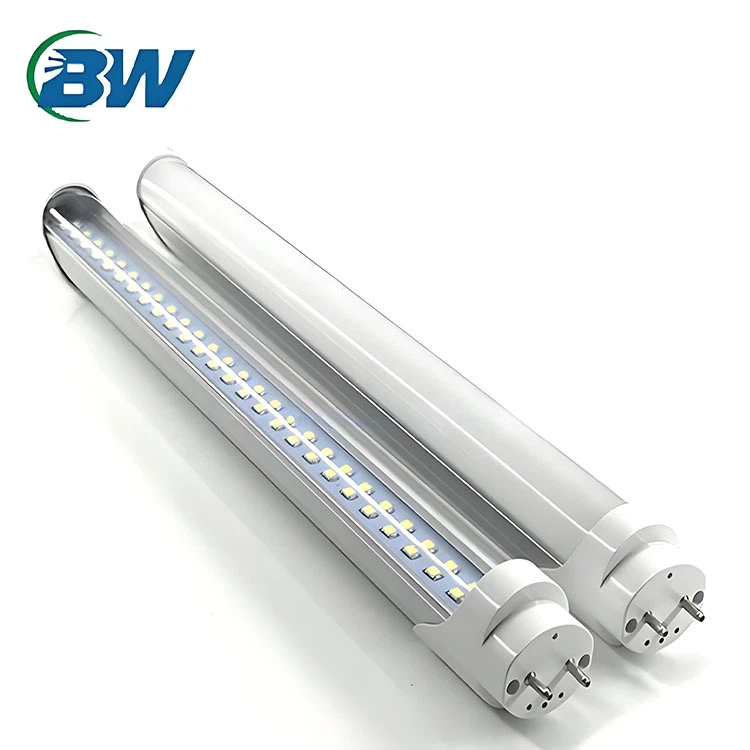
Our lighting is lighted down the whole length of the fitting, with our spectacular Emergency LED tube taking centre stage (up to 3 metres long in standard application).
We would be more than pleased to visit you at your location to talk about your needs and have a look around.
Also, we provide lighting conversion services! As a result, our clients may provide conventional goods with emergency or dimming capabilities and cut down on lead times. When adjusting is needed for on-site luminaires, the service is excellent.
Simply give us the details of the product and the required work, and we'll respond right away with a practical answer.
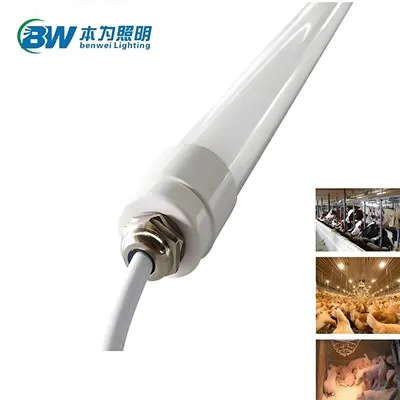
When it comes to being ready for an emergency, don't take any chances. Our emergency LED tube are built to be attractive, unobtrusive, and easy to install, making them a perfect addition to any space. Right now, you may ask for a quotation from us.
Contact our outstanding staff at benweilighting.com to place your emergency lighting order right now.