Every human being has the fundamental right to an education. The only way to ensure a sustainable and self-determined future is via education. Due to a shortage of energy resources, many nations throughout the world struggle with the quality of education provided to students. While though free and compulsory education is required by law in India until the age of 14, many rural areas of the country have significant challenges in providing even the most basic education to children owing to a variety of issues, including a lack of adequate infrastructure. Due to a lack of dependable electrical power sources, student attrition rates are significant in these locations. The kids turn to kerosene lamps and candles at night to do their schoolwork or study for their examinations if both their schools and their households fail to provide the required help in this area. The kerosene lamp's toxic fumes and low light levels can be hazardous to health and reduce kids' academic performance. When youngsters of school age are required to handle these kinds of alternative power sources, fire mishaps and fuel poisoning are also regarded as risks. There is a lack of knowledge of the issue since many parents in rural India are uneducated and may have had similar problems when they were children. The parents' lack of interest in their children's education may be one of the main causes of school dropouts.
Most of us who have access to power might not recognize our advantage, and unless we experience off-grid life, it is easy to underestimate the significance of light. Consider the struggles thousands of students would face if they were to compete with their urban counterparts in terms of academic engagement and results while living in rural locations with limited or no access to power. Even while some are fortunate enough to be on the grid, the largest obstacle for such households or schools continues to be the unpredictable power supply and inability to pay electricity bills. Rural communities must take into account alternative energy sources in order to allow kids to follow their academic interests and to encourage greater learning. The acquisition of fundamental abilities requires literacy, which also provides a wealth of opportunities for social connection and personal growth. We lose potential just because our kids don't have access to basic education, which is a loss for the nation as a whole. Lighting must be available in off-grid locations with unreliable energy sources in order to combat illiteracy. Sustainable solar lighting provides the convenience of contemporary illumination and is a secure and healthful replacement for candlelight and kerosene lamps.
Several Charities and organizations support literacy initiatives and give study materials to the less fortunate, yet in places without access to electricity, these resources are wasted. In remote locations, there are a lot of committed instructors who are ready to travel long distances and occasionally work unpaid. Children in poor nations are typically very motivated when given the correct sort of supervision because they understand that school is their first step toward a brighter future. Along with the dedicated professors, these kids have the potential to open up numerous options for society's youth. Children assist their parents at work throughout the day in many rural places all over the world. Such student communities can attend evening lessons after sundown if they have access to solar-powered illumination. Solar energy, which is secure and reasonably priced, may be used to power the teachers' offices and classrooms. Another idea is to provide a solar lamp for every child, so that even if the house is not entirely powered by solar energy, the child may still learn at night. Due to a shortage of power, many instructors in rural locations may not have access to high-quality instructional resources. Solar-powered computers are not portable but they nonetheless give all the benefits of a standard computer with internet employing just free solar energy which is available in plenty. Teachers may refresh their knowledge often by using online teaching resources, audiovisual visuals, and films to enhance the learning experience.
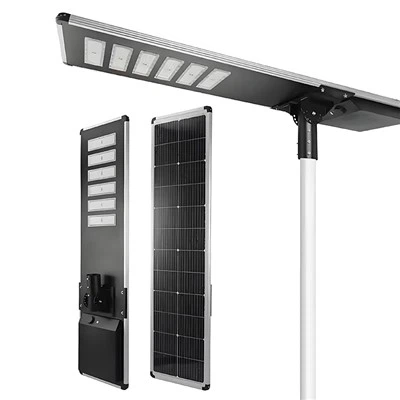
Malnutrition affects children from low-income homes occasionally. Several rural schools encourage pupils to grow their own food on the school grounds so that they may provide their classmates school lunches. These gardens are reliant on time- and labor-intensive hand irrigation. Water irrigation in classrooms is made simpler and more effective by solar water pumps. Students and adults alike can benefit from better living circumstances thanks to solar energy. As solar-powered lamps provide greater illumination than kerosene lamps, they help prevent crowding around a single source of light. With the aid of these lights, kids may effectively learn throughout the dark hours. After school, instructors are given additional time to complete administrative tasks, review answer sheets, schedule exams, and create lesson plans. Kerosene lamp smoke can seriously harm children's health, including breathing difficulties, headaches, eyesight troubles, tension, and discomfort. Clean illumination provided by solar lights helps kids stay healthy and make the most of their time. The adults may save the money they would have spent on kerosene because these solar-powered lights only require a single investment and their energy needs are steady and year-round. As there is less of a risk from wild animals, it is safe to use the bathroom and move around the house and school, and there is no chance of fire from kerosene or candle lights, solar illumination gives people a sense of security and safety both inside and outside of their houses.
The students and instructors can be given portable solar lights if there isn't enough money for the school to power the facility fully with solar energy. In the market, there are portable, lightweight emergency tube lights, solar study lamps, solar torches, and DC Kits. All of these lamps include an LED bulb, an integrated battery, and a solar charging system. There are simple ways to charge the portable solar panels. Up to four hours of brilliant light may be produced by a fully charged portable lamp. A small study group of three or four people can use these lights since they provide enough brightness. Once they have finished their study, the students may bring back these lights to the school so that new students can benefit and the institution won't need to worry about spending money on more lighting. To save money instead of purchasing separate solar panels for each student, the school can alternatively use a shared, central solar charging system. The primary benefit of solar lights is that they require little to no maintenance and nearly no installation fee, especially if they are portable. The fact that these lights are so little makes it simple for kids to carry them. The installation instructions are quite straightforward, and the display indications make it easy for instructors and students to comprehend the characteristics of the light. According to surveys, providing these amenities encourages increased school attendance and academic achievement.
The Indian government has several programs for rural development. For the installation of solar illumination in rural households, there exist incentive programs. Even the most isolated schools in the most difficult places may now have lighting solutions thanks to funding from public-private partnerships. The companies that worked closely with the school administrations were able to keep an eye on the operation and use of the installed lights. Research and upcoming initiatives in ruraland/or tribal regions without conventional power supplies can utilise the information that was captured. Social workers play a critical role in the overall development of rural communities. They collaborate closely with both regular citizens and municipal officials. The faith and trust that these two parties place in social workers may help to raise parents' knowledge of the needs and rights of children as well as the significance of providing them with an education. As a result, the ratio of child labor may decline. The usage of solar-powered lighting and how to charge portable lights should be made clear to the teachers. Children have a great chance to learn about environmental issues and renewable energy sources because of this circumstance. In order to give adults a second chance at learning, the organizations dedicated to tribal and rural development could also take the initiative to organize literacy programs for them as well. Improved health, better education, and financial security for families are all made possible by solar energy. It enables both adults and students to build better social environments for themselves and their offspring. Children are our future, so it is our responsibility to make sure they have access to all the resources they will need to have a bright future.